
How We Think About Designing a Wedding Reception
Updated: Aug 19

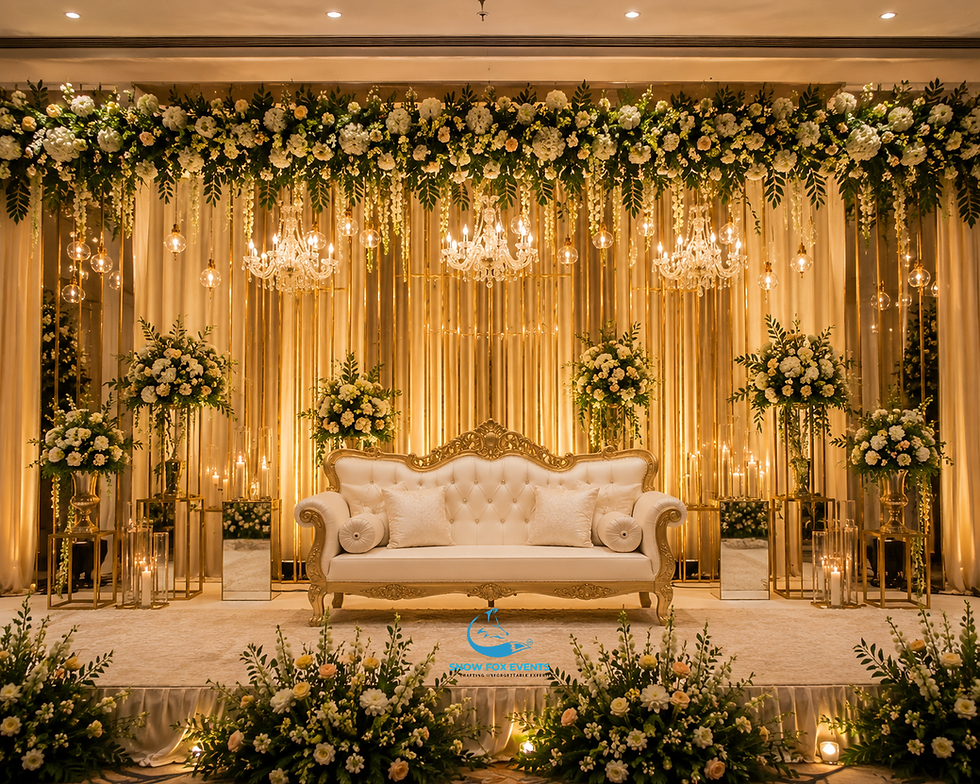
Ask ten couples what they want their wedding or wedding reception to feel like, and you'll likely get ten different answers. Some want grand and dramatic. Others want quiet and intimate. Most want something in between, elegant without being overdone, personal without feeling too small. Figuring out where on that spectrum a couple actually sits is where every good design process begins, long before anyone starts talking about flowers or fabric.
Here's a look at how we actually approach that process.
Start with a feeling, not a color palette
It's tempting to start planning with the visual stuff, colors, florals, lighting. We've learned it works better to start somewhere less obvious: how do you want your guests to feel the moment they walk in? Warm and welcomed? Awestruck? Relaxed and unhurried? That one answer shapes almost every decision that follows, far more than any mood board does on its own.
A reception designed around “warmth” looks completely different from one designed around “grandeur,” even if both use similar colors and similar flowers. The feeling comes first. The visuals are just the tools we use to get there.
Let the venue tell you what it wants
Every space has a natural personality. A venue with tall ceilings and open architecture practically asks for height, canopies, hanging installations, dramatic vertical florals. A more intimate, low-ceilinged space usually wants the opposite, low centerpieces, warm ambient lighting, decor that draws the eye inward rather than upward.
Fighting against a venue's natural shape rarely looks as good as working with it. Some of our favorite design decisions have come from simply asking, “what does this room already want to be?” before adding anything to it.
Restraint is harder than excess
Anyone can fill a room with decor. The harder skill, and the one that actually separates a beautifully designed event from an overwhelming one, is knowing what to leave out. A single well placed floral arch says more than five scattered smaller ones. A handful of thoughtfully lit candles says more than an entire room lit at full brightness.
We spend a surprising amount of planning time deciding what not to include, just as much as deciding what to add. It's rarely the flashiest choice that guests remember. It's usually the one quiet, well considered detail that catches them off guard.
Small details, disproportionate impact
Some of the choices that matter most in a reception have nothing to do with the big visual statement pieces at all. The walkway guests take to their seats. The lighting temperature, which can completely shift how photographs turn out. Where elderly guests are seated relative to speakers and stage lighting. None of these show up on a mood board, but they shape how the evening actually feels to the people living through it.
Designing for the people in the room, not just the photos
It's easy to design purely for how a space will photograph. We try to design for both, how it looks in a photo, and how it feels to actually stand inside. A stunning backdrop means little if the seating underneath it is uncomfortable, or if the lighting makes conversation difficult. The best receptions we've worked on succeed on both fronts at once.
Why this approach matters to us
None of this is really about following a formula. It's about listening carefully to what a couple actually wants, reading a space honestly, and having the discipline to leave things out as much as we add them in. That's the thinking behind every reception we design, whatever the scale or style ends up being.
If you're starting to think about your own wedding reception and want to talk through what direction might genuinely fit you, we'd love to have that conversation.
Frequently Asked Questions
How do I know what style my wedding reception should be?
Start by defining a feeling, not a color scheme. Ask how you want guests to feel walking in, warm, awestruck, relaxed, and let that single answer guide every other decision. Couples who lead with a feeling instead of a Pinterest board end up with more cohesive, personal receptions than those who start with visuals. Once that feeling is clear, your venue's architecture and your guest list size will naturally narrow the options further.
Does the venue affect what kind of decor will work?
Yes, significantly. Tall-ceilinged, open venues suit height-driven decor like canopies and hanging installations, while intimate, low-ceilinged spaces work better with low centerpieces and warm ambient lighting. Working with a venue's natural shape consistently looks better than fighting against it. Before finalizing a decor plan, it's worth asking “what does this room already want to be?”
Is more decor always better for a wedding reception?
No, restraint is usually the harder and more effective choice. A single well-placed floral arch typically has more visual impact than five smaller scattered ones, and a handful of thoughtfully lit candles reads better than a room lit at full brightness. Deciding what to leave out takes as much planning time as deciding what to add. Guests tend to remember one quiet, well-considered detail far more than a room packed with statement pieces.
What small details actually make a difference at a reception?
Guests notice the walkway to their seats, the lighting temperature (which directly affects how photos turn out), and where elderly guests are seated relative to speakers and stage lighting. None of these appear on a mood board, but they shape how the evening actually feels to the people living through it. These details are usually decided late in planning, which is exactly why they're worth raising with your decorator early.
Should I design my reception for photos or for the guest experience?
Both, ideally, and they're not mutually exclusive. A design should photograph well and be genuinely comfortable to sit in, a stunning backdrop matters less if the seating underneath it is uncomfortable or the lighting makes conversation difficult. The best receptions succeed on both fronts at once, not one at the expense of the other.
Every unforgettable celebration begins with thoughtful planning. Whether you envision a grand reception or an intimate gathering, our team will help bring your vision to life with elegant décor, seamless execution, and personalized design.
Contact Snow Fox Events today to start planning your wedding reception.
Comments